
Konitsa Summer School in Anthropology, Ethnography
and Comparative Folklore of the Balkans

Konitsa, Greece, 30/7-12/8 2006


In this page (index):

Greek FlagΕλληνική Έκδοση

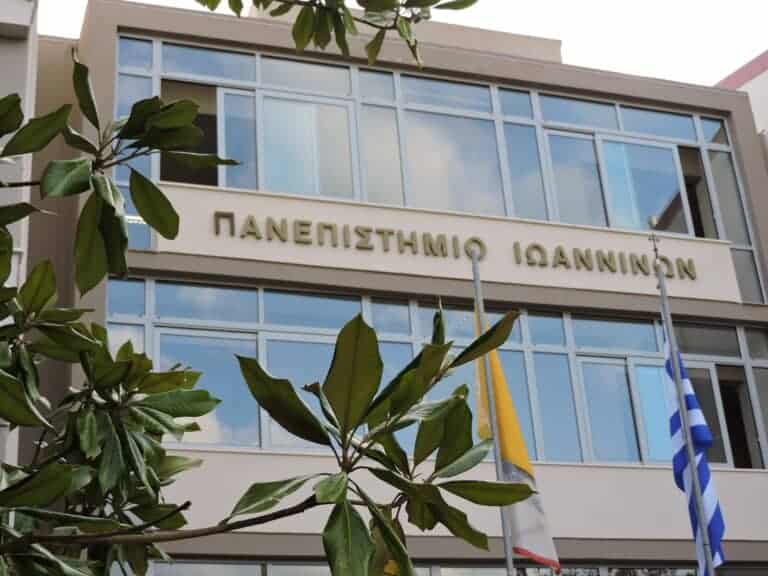
The University of Ioannina organises in collaboration with the Municipality of Konitsa, a "Summer School[1] in Anthropology, Ethnography and Comparative Folklore of the Balkans" in the city of Konitsa in the period 30/7-12/8/2006.

1.     Thematic fields


2.     Courses offered

Course director: Prof. Vassilis Nitsiakos

[top of page]

3.     Guest lectures

[top of page]

4.     Course description

During the last decade the Balkans attracted the interest of an increasing number of social anthropologists. Recently published papers and monographs influenced both our understanding of the region as well as anthropological theory. The course discusses the origins of ethnographic accounts of the Balkans ("Western travelers and the understanding of the Balkans"), the interwar fieldwork projects in the region ("Fieldwork, ethnography and community studies"), the relationship between Mediterranean Anthropology and Balkan ethnographies, the postmodern perspectives of the Balkans ("Narratives and images: Balkanism and beyond") and the post-socialist anthropological analysis of the region. Teaching methods: lectures, film screening, seminars. The course will be taught in both English and Greek.

Dr. Georgios Agelopoulos is assistant Professor at the Department of Balkan, Slavic and Oriental Studies, University of Macedonia, Thessaloniki. He holds an M.Phil. (University of St. Andrews, UK) and a Ph.D. in Social Anthropology (University of Cambridge). His research interests include the study of Nationalism and Ethnicity, Balkan Anthropology, Minorities, and Migration. He is currently teaching courses on "The Balkans, Europe and Modern Greece" and "Balkan Ethnographies".

Dr. Deema Kaneff holds a PhD in Anthropology from the University of Adelaide. She is a Senior research fellow at the Max Planck Institute for Social Anthropology, Germany. Her research interests focus on social and economic transformations in Eastern Europe (Bulgaria and Ukraine).


The course will start with a discussion of the concept of Socialism as understood, applied developed from 1945 to 1990 by the government of the Socialist Republic of Yugoslavia and other neighboring socialist countries. Specific emphasis will be given on the state's policy toward some important domains of the individual, family and public social life such as residential questions, planning the family life, institutional care for children by specific programs and education in the schools. Issues of gender will also be examined in the light of the state socialist policies and individual case studies from specific contexts. In addition, there will be a focus on one of the most challenging questions in Yugoslavia, observing from inside and from outside, that of ethnic and national feelings in relation to religion. As regards the present post-socialist reality, we will point to different approaches to the analysis of Yugoslavia's dissolution. Individual (hi)stories of people living in that times from different parts of Yugoslavia will be presented. Last but not least, the processes of stabilization and European integration of this part of Balkans through the prism of an individual experiences will be addressed.

Dr. Ljupco S. Risteski is associate Professor at the Institute of Ethnology and Anthropology, University of Sts. Cyril and Methodius - Skopje. He received an MA (1997) in Social - Cultural Anthropology from the Faculty of Philosophy, University of Belgrade and a Ph.D. (2002) in Ethnology from the . University "Sts. Cyril and Methodius" - Skopje. His research interests include Balkan ethnology and anthropology, especially the fields of mythology and folk religion of Balkan Slavic people.


In the first past of this course we propose an anthropological understanding of the nation-building processes and the construction of minority groups. We also aim to foreground the relation between the construction of the nation-states and the proliferation of migrants and refugees in the world. In this context we shall explore the pragmatic and the symbolic aspects of borders, asylum, both voluntary and involuntary migration from the point of view of geographic, political and economic relations between the countries of origin of migrants and the countries of destination. We shall discuss migratory trajectories in the context of global political economy and the division of labour. Through concrete ethnographic paradigms, we shall approach the relation between migration and the production of collective identities. Similarly, issues on diasporas, hybridisation, xenophobia and racism will be presented and discussed.

In the second part, the course deals with the processes that gradually led to the formations of nations and ethnic communities in the Balkan area. Those processes concern not only ideologies and symbolisms but also everyday practices and products of material culture. In the first case we are concerned with public narratives, formal symbols and ceremonies that defined and prescribed the boundaries of ethnic groups. In the second case we are concerned with everyday relations and micro-politics that both constructed and questioned collective identities. The formal body of history, religious rituals, memorials and parades are but some examples of what we call formal or public practices which hold the ethnos together. Other unofficial narratives operate as counter-narratives of those public and virtually homogenising ones. The unofficial narratives deal with the everyday human practices and the local dimension of their consciousness. It is true that everyday relational realities seriously question public narratives since they have the power to reveal a world of contradictions, tensions, exchanges, contestations and negotiations. By this token "homogeneity" proves to be a rather problematic concept and in return other concepts come to the fore like "difference", and "multi-layered" identities. Such concepts reveal the complexity and the fluidity of national and ethnic identifications.

Dr. Yiorghos Tsimouris is assistant Professor at the Department of Social Anthropology, Panteion University, Athens. He studied Sociology at the University of Essex, UK (M.A. 1994) and Social Anthropology at the University of Sussex, UK (PhD. 1998). For his doctoral thesis he conducted research among people who came as refugees from Asia Minor, after the Greco-Turkish war of 1922. His last research is on the trajectory of the Greek community of Imvros (Gokseada).

Dr. Vasiliki Kravva completed an MA (Master of Arts) and a PhD (Doctor of philosophy) on Social Anthropology at Goldsmiths College, University of London. She is currently teaching at the Technological Institute of Thessaloniki, and for the LSE external programme. She is also a researcher working for the CENTROPA research project which is concerned with the pre-war and post war lives of European Jews.


In this course we propose an anthropological reading of the socio-economic transformations of the post-socialist Balkan societies. We will first focus on theory, and more specifically on some anthropological texts which seem particularly useful for the analyses of the ongoing social and economic processes in this area. We will examine also how, and to which extent, the study of these societies had some impact on the renewal of the anthropological thought itself. It is observed that after the fall of the Berlin wall a reflection about the "economy of market" comes again back on the front stage. Our aim is to show how the anthropological theories allowed the shift from a clear ideological, and to a great extent abstract, debate, to the study of the concrete economic practices, considered more as "cultural" rather than as "natural" events. Theory will be documented with ethnographical paradigms from our own researches in Bulgaria as well as from numerous other ethnographies published over the last years.

Dr. Aliki Angelidou is lecturer in Social Anthropology at the Department of Social Anthropology, Panteion University, Athens. She completed her PhD in Social Anthropology at Ecole des Hautes Etudes en Sciences Sociales, in Paris, exploring the socio-economic transformations in post-socialist rural Bulgaria. Currently, she carries out research on migration and multiculturalism in Athens with special focus on migrants from former Soviet Union and East European countries.

Dr. Sophie Chevalier is a lecturer in social anthropology at the University of Franche-Comte and a specialist in economic anthropology. She was trained as an anthropologist at the University of Nanterre and her first research compared domestic material culture in France and England. Since then she has worked intermittently in Bulgaria and is currently part of a multi-country EU study of kinship and social security. She spent two years at Cambridge University and has taught in Brazil.


The first part of the course, called "Borderlands and beyond" will discuss three related problems. First, after analysing Bourdieu's perspective on the idea of region, the construction of three boundaries will be explored: the one in Catalonia (between France and Spain), the river Rhine (between France and Germany), and the one between East and West Berlin. Second, the movement of established boundaries and the crossing of boundaries will be compared through three types of movement - the vanishing border of the USSR and its effects on the local post-Soviet populations, emigration from East Germany, and the cross-border movements of socialist Romanians, shopping in Hungary. In the last section of the course, attention will be paid to recent critiques of the concept of borderlands such as the notion of hidden frontiers, non-places, and transnationalism.

The second part of the course will be dedicated to identities, especially ethnic and national identities on the Balkans. The main elements of the construction of collective identities, such as common origin, language, religion, history and memory etc will be presented in the context of majority-minority relations on the Balkans. Several cases of obvious discrepancy among these elements and the resulting ambivalent, multiple or unstable identity (Pomaks, Bosneans, Gagauzes, Wallachians, Macedonians) will be analyzed. The main motivations of identity shift will be outlined. Special attention will be paid on data of borderlands and regions with mixed population.

Dr. Evgenia Krasteva-Blagoeva is a chief assistant professor in cultural anthropology in the Antropology Department of New Bulgarian University, Sofia, Bulgaria. She has M.A. degree in ethnology from the Sofia University "St. Kliment Ohrisdki" (1994) and Ph.D (1998) from the Bulgarian Academy of Sciences, Ethnographic Institute with Museum. Her main research interests include names, name-giving and renaming; contemporary ethnic processes, studies of communities and identities in the Balkans as well as the main ethnic and religious minorities in Bulgaria.

Dr. Rossitza Guentcheva is a Returning Scholar within the Academic Fellowship Programme of OSI/HESP, teaching at the Department of Anthropology of New Bulgarian University - Sofia, and at the MA in Social and Cultural Anthropology of the Cultural Studies Department of Sofia University. She holds an MA (1995) from the Central European University-Budapest, an MPhil (1997) and a PhD (2001) in History from the University of Cambridge. Her research interests include migration and mobility, anthropology of socialism, contemporary social and cultural history. Currently she is teaching the following courses: "Cultural Mobility", "Culture, Migration and Citizenship", "Contemporary Debates on Nationalism".


This course is an Introduction to Ethnographic Fieldwork and will be conducted in both Greek and English. It focuses on issues such as Re-thinking "participant observation"; from realist ethnography to modern paradigms; Fieldwork and the understanding of the "other"; Identity and "otherness"; Applied ethnography in border areas; National borders and ethnic groups and boundaries. It examines the case of the Greek- Albanian border zone with fieldwork practice in the area of Konitsa (Greece) and Permet (Albania).

Prof. Vassilis Nitsiakos holds an MA in Folklife studies (University of Leeds) and a PhD in Social Anthropology (university of Cambridge). He is teaching courses on Ethnic and National identities in the Balkans. His current research interests involve issues of migration, identities and the Ethnography of borders in the Greek-Albanian border.

Dr. Vasilis Dalkavoukis is Lecturer of Ethnography of Greece at the univ. of Thrace. His research interests include issues of local and ethnic identities in Northern Greece.

Kostas Mantzos holds an MA degree in Social Anthropology of UCL and is currently completing his Phd thesis on the Greek minority of Albania.


The course will present an introduction to specific aspects of qualitative research methodologies. During the course students will have the opportunity to get acquainted with basic and advanced concepts of this kind of anthropological fieldwork methodology and to participate in focused discussion of their own research projects. At the end of the course the students will be expected to present a detailed description research agenda on a chosen topic. Presentations will involve a group discussion and tutorial evaluation of suggested projects. After the course, students will have acquired the necessary skills to independently design and conduct qualitative and applied research in the future. Additionally, the course will focus on the applied dimension of fieldwork research. During the course students will have the opportunity to get acquainted to and discuss in detail various aspects of applied research methodologies, based on a number of examples including those from their own experience. We will particularly examine the ethical issues concerning applied research, as well as the advantages and disadvantages of applicability as a methodological goal. At the end of the course students will present ideas related to future research projects involving the applicability of results.

Dr. Bojan Zikic is Lecturer in Social Anthropology at Department of Ethnology and Anthropology, Faculty of Philosophy, University of Belgrade. He received his MA (1996) and PhD (2001) from the Department of Ethnology and Anthropology, University of Belgrade. He has performed fieldwork in numerous parts of Serbia. The latest one includes HIV vulnerable populations in Belgrade.

Jana Bacevic, is Teaching Assistant in Methodology and History of Serbian Ethnology courses at the Department of Ethnology and Anthropology at the Faculty of Philosophy, University of Belgrade, and Head of Social and Cultural Anthropology Seminar at Petnica Research Station, Valjevo. She is currently finishing her M.A. thesis on anthropology of education.


In this course, we will examine anthropological perspectives and ethnographic case-studies of music and dance in Balkan countries. Music and dance are interrelated social activities and critical cultural domains in which social relations, cultural symbolisms, transformations and conflicts are collectively articulated and expressed. We will approach music and dance as social and cultural practices, as well as symbols, implicated in the construction of collective identities and the formation of local, national and transnational processes of network-building. We will also address the role of music and dance in the politics of identity, minority rights and border-crossing. Based on the instructors' ethnographic fieldwork in the Florina region of northern Greece (Manos) and in the Greek island of Naxos (Panopoulos), as well as on several case-studies from various Balkan countries, we will focus on the significance of music and dance in the construction of gender, national and minority identities, the role of music in Balkan Roma cultures, the ethnography of sound, the study of dance events, and the politics of culture and identity and the power struggles in state border regions. We will also consider some wider theoretical and methodological questions of ethnographic practice: the interplay of observation and participation in music and dance performances; the position of the ethnographer in border regions; issues of "authenticity", revitalizing of "tradition" and the influence of the market in the transformation of music and dance. The course will also include short fieldwork practice in local music and dance events.

Dr. Panagiotis Panopoulos is Assistant Professor of Music and Dance at the Department of Social Anthropology and History, University of the Aegean, Mytilini, Greece. He studied Education at the University of Athens and Social Anthropology at the University of the Aegean. He was awarded a PhD by the University of the Aegean in 1998. His recent ethnographic publications concern the symbolism of sound and hearing in modern Greece, through a case-study of animal bells. Another part of his research interests concerns the study of local associations and the role of musical performances in the construction of identity.

Dr. Ioannis Manos is lecturer in Social Anthropology in the Department of Balkan Studies at the University of Western Macedonia, Florina, Greece. He holds an MA (1998) and PhD (2002) in Social/Cultural Anthropology from the University of Hamburg in Germany. He has conducted fieldwork on the politics of culture and identity, the politicization of dance and its role in identity formation processes in Greece and the Balkans.


The aim of this course is to discuss some major transformations within the East European socialist societies through various consumption practices. The course will start with a discussion of major concepts used by the socialist policy makers, namely 'class', 'ethnos' and 'byt' or everyday life. Different periods of socialist history will be analyzed through changing state policies towards consumption, and the consumers' response to them. The readings for this course will present a variety of tools for analyzing topics like popular literature, architecture, furniture design and materials, etc.

Dr. Ilia Iliev is assistant professor at the Department of Ethnology, University of Sofia, Bulgaria where he got his PhD in 1998. He teaches History and Theory of Ethnology and Ethnography of Socialism and is doing applied research on poverty and social exclusion in nowadays Bulgaria. His major research interests are social history of the communist countries, ethnicity, and poverty issues.


[top of page]

5.     Organizational Team

The teaching staff that is in charge of the planning of the Konitsa Summer School consists of the following members :

Guest Lecturers

[top of page]

6.     Application Procedure

Each applicant should complete an application form and send it per email to the Summer School contact email address: konitsa_summerschool@yahoo.gr.

The application can be downloaded from here: [Application Form]

Deadline for the submission of application is the 30 April 2006. All applicants will be have been notified by the 9 June 2006.

The daily schedule will be comprised by two morning and one afternoon teaching session.

Eligible to apply are final year undergraduate, MA and doctoral students from any Balkan, European or other country. Seventy (70) participants are expected to be admitted.

An estimated fee of 200 € is necessary for admission. This amount is intended to cover the travel costs of the lecturers and guest speakers.

Accommodation and travel expenses during the Summer School will be covered by the municipality of Konitsa. The fee should be paid upon registration in Konitsa. Any travel costs for coming to and leaving Konitsa must be paid by the participants themselves.

A Certificate of Attendance will be provided to the Summer School participants.

[top of page]

7.     Social Events

The first two weeks of August is a period with many social events, religious celebrations and public feasts in all parts of Greece. In addition to this, the Municipality of Konitsa intends to organise various cultural activities on the occasion of the Summer School. A two-day excursion to the beaches of the Preveza area will also take place on the weekend 5-6 August.

[top of page]

8.     Useful Information

The following web sites are provided for obtaining information on the University of Ioannina and the town of Konitsa. Additionally, a short note for the "Border Crossings" network gives a brief summary of its history, activities and accomplishments

[top of page]

9.     Contact address

For any further questions and clarifications regarding the Konitsa Summer School contact the School's email address: konitsa_summerschool@yahoo.gr


[top of page]


  1The Konitsa Summer School falls within the framework of activities of the "Border Crossings" academic departments' network.


University of Ioannina